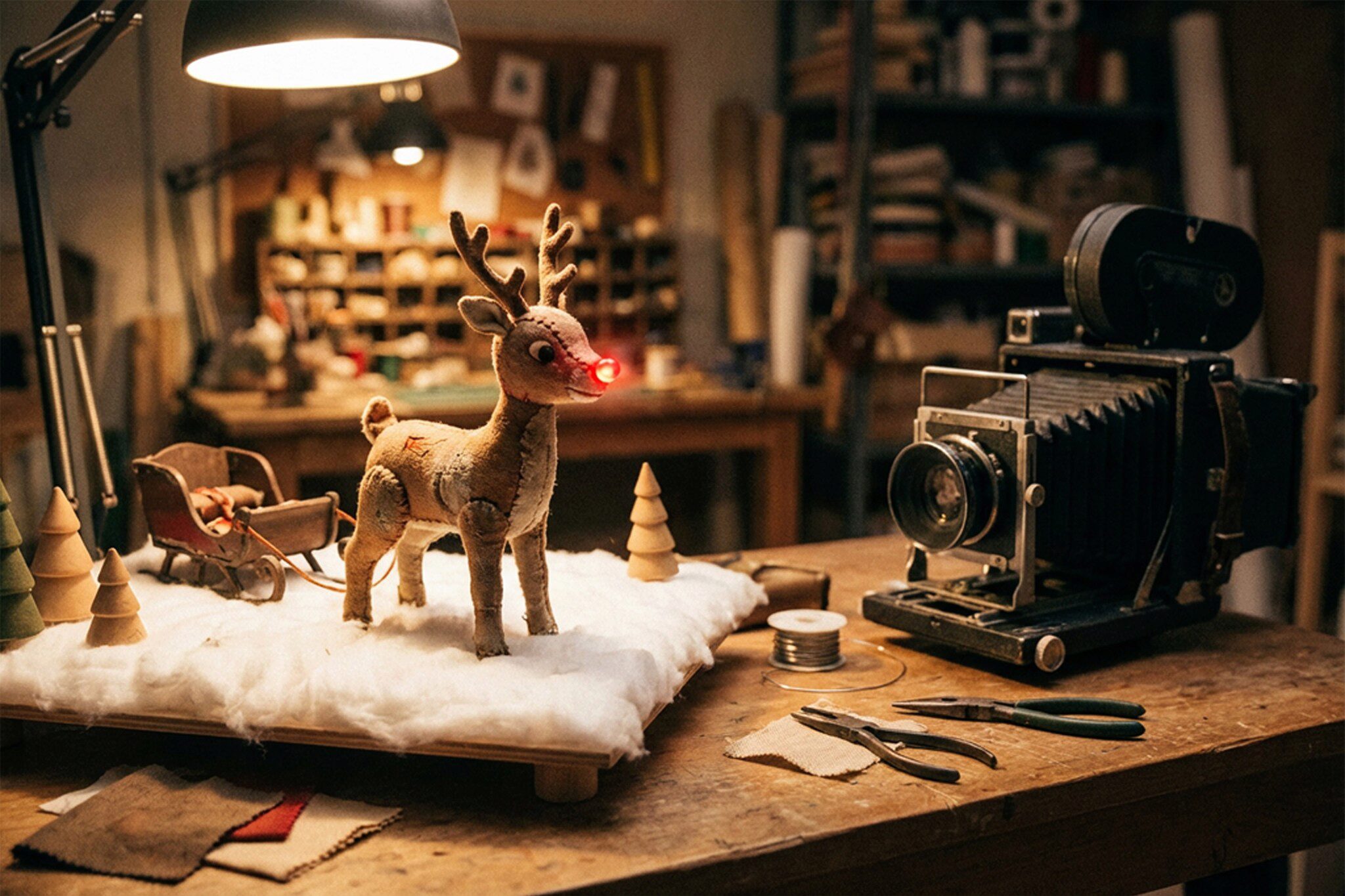
Every December, millions of people revisit the same stop-motion Christmas specials: Rudolph the Red-Nosed Reindeer, The Little Drummer Boy, Santa Claus Is Comin’ to Town and others that feel as much a part of the season as lights and music. Their charm is unmistakable. Their style is instantly recognizable. And remarkably, nearly all of them were created under conditions that would make most modern creative teams freeze.
In the 1960s, Arthur Rankin Jr. and Jules Bass ran their productions with small crews, limited budgets and equipment that was decades behind Hollywood. Animators worked frame by frame, moving each figure by hand and sometimes spending an entire day to capture only a few seconds of usable footage. Their puppets were hand-stitched, repaired constantly and lit with whatever basic gear they could afford. Reshoots were rare because there simply was no margin for them.
Yet out of all that constraint came something enduring. With limited resources, Rankin and Bass leaned into simple storytelling, careful planning and the emotional heart of each project. They focused on what mattered and trusted that the small, faithful work of each frame would add up to something meaningful. Their limitations became the very thing that shaped their distinctive style, leaving a legacy more enduring than many high-budget productions that came and went.
There is a lesson here for modern organizations. It is easy to believe that meaningful work requires more — more budget, more technology, more features, more people. But more does not inherently create better outcomes. Constraint, paired with purpose, often produces the most inventive ideas.
At Bark, we help organizations find that sense of focus. Creativity flourishes when teams understand who they are, what they are building and why it matters. When you stop waiting for ideal conditions and start working with the resources you already have, constraint becomes a catalyst instead of a barrier.
Rankin and Bass didn’t succeed because they had abundance. They succeeded because they used what they had with intention, discipline and imagination. Creativity grew, not in spite of the limits, but because of them.